Acasă Blog

Andy Willoughby, The Kafka Exhibition

0
KafkaTok - photo Alica Záhorská
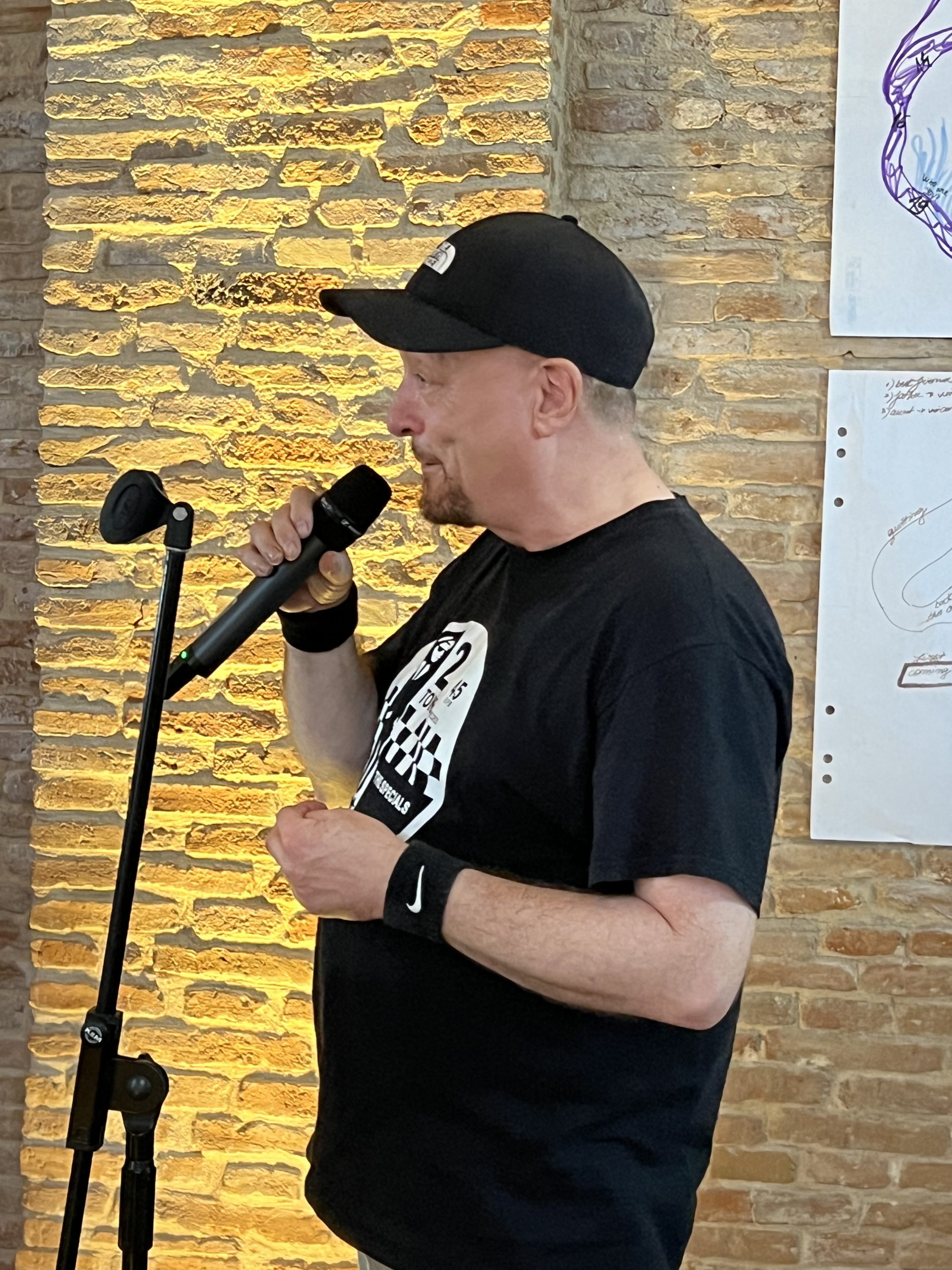
Andy Willoughby parlaying poetry at the International Poetry Festival ”Poetry – Harbour to The Danube” – June 2023 – foto – Peter Sragher

The British poetry performer Andy Willoughby had a look at both Peter Sraghers’ considerations (see here: https://www.fitralit.ro/31-01-2025-peter-sragher-k-from-kafka/) about the visual art exhibiton Kafka Labyrinth by Alica Záhorská that was shown in Levice, Slovakia and also at the visual artists’ own thorough insights (see here: https://www.fitralit.ro/31-01-2025-alica-zahorska-kafkas-labyrinth-a-visual-art-exhibition/ ). Although the poet hasn’t’t seen the exhibition – as also Peter Sragher did not – he was so passionate about it, because we found out that he revered Kafka, too. Thus, he agreed to write about the cultural event after seeing many photos and the short video presentation. (Fitralit).

* * *

I am standing at the door with a sign marked K. It is in the castle of my mind. It has been there a long time since I was a teenager and first walked through it. I notice on my arms there are one or two scars where I clumsily removed the insect hairs growing there with a razor so no one would know. Reading Peter Sragher and Alica Záhorská on their encounters with Kafka and looking at the pictures and film of her exhibition Kafka’s Labyrinth in Levice, has me back there in an instant.

When I first encountered Josef K and Gregor Samsa I was in my late teens. Britain had been to war in the South Atlantic, unemployment on my council estate in North East England was rocketing as in the rest of the region, mines were closing or under threat of closure, shipbuilding was under threat, steel works cutting back, strikes loomed. The country was marked with a T for Thatcher. The bureaucracy of unemployment was growing and getting colder. I was aware of the rules and knew that signing on the dole was probably at the end of college if I didn’t become the first person in my family to go to University though it took me an extra year to bite that peach.

I found Kafka in my catholic St. Mary’s VI form college in my hometown of Middlesbrough. The Marist priests in charge didn’t censor the librarians. As well as K for Kafka where I found maps to my existential crisis, I was directed by Mr Sturgis to K for Kerouac and boom went the call of the road in my head. Reading “Metamorphosis” I saw the insect I had just been in adolescence, fingered a few acne scars, thought about the coldness of the world for those who were different. I knew a little about Kafka’s life then, but I was well read in Jewish history in Europe and saw the prescience in his work, too. I was reading Ginsberg too in an anthology given to me by my teacher Mrs Walker outside the syllabus. I see now that I wasn’t alone like K or Samsa, that I was lucky some staff in that Sixth Form (ie: Senior High) saw something in me. However, the times, class struggle, punk rock and its aftermath, meant that when I read “The Trial: the K door was as clear to me as the illusory open road of America that Dean and Sal were riding in search of their freedom dream.

The K door led to application forms, police who stopped you in the street asking where you were going as you walked from your estate to the one your girlfriend lived on, the fear of being arrested for being in the wrong place at the wrong time at the football match, at the mall, all the rules of school past, nuns, slippers and canes and headmasters shouting “ You boy! come here at once”, your fathers rules: “shine your shoes for Sunday mass!”. The hiding of  at least half the words you found in books from your speech to avoid the insult of BIG WORDS and the possible boots of the bullies.

Once you’d been through the K door with Josef, and felt, no, recognized the unease, then terror of a labyrinth of power, rules and language with no apparent meaning except to serve the system itself you saw the K repeatedly, whenever someone tried to impose the rules on you, it heightened your beat dreams of escape, it fed your ability to rebel against authority, to laugh at the solemn, for better or worse it made you unable to play along and climb in the systems you moved through, it gave you an urge to mask this knowledge too lest they tell lies about you and have you arrested one morning.

You felt the K door might be locking behind you in hostile unemployment offices, on university applications and personnel forms, you see the giant letter printed on every page of your job applications, tax return, grant applications, your medical questionnaires, your yearly performance reviews and on the foreheads of teaching inspectors in your classroom. Now it’s lurking behind the screen as you order or post online and someone, somewhere – for an unexplained and possibly sinister future purpose – is collecting your data.

The importance of recognizing the tropes in Kafka’s work in life now seems to me pressing as it may be possible for us to resist mindless systems of authority or those encouraged by unseen potential dictators’ hands if they are made at least as visible to us as they were to poor lonesome Franz who wanted all his words to disappear too into flame. We need not believe, it seems, that we cannot communicate the self to the world to have an effect, and even if we cannot exit the rooms with doors marked K at least we can find something in recognizing them together. The exhibition of Alica’s in Levice sought to bring young people to Kafka like my St Mary’s College librarian teacher did just by displaying the book and directing me towards it, when so many words and images online seem to stop reading for long periods, and we need to find new ways to open the K door. This can only be a good thing as its better to see the K door rather than just be led through it like sheep by the invisible gatekeepers and then have it obscured by their interminable rules.

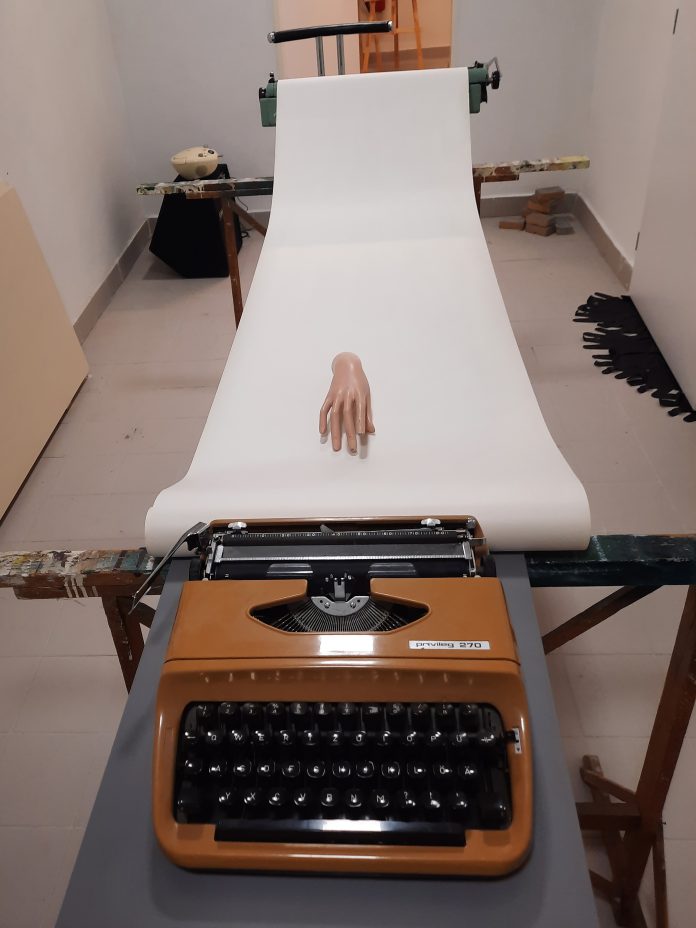
Court room – Files Installed in Chaos – photo Alica Záhorská

The giant letter K hanging above the young people and the link to Kafka means they will carry that as symbol of what it feels like to be on the overreaching, inhuman end of unthinking power, like us, the artist and poets, they will at some point recognize it again and the smile they make to themselves will help them with the fear, and hopefully encourage them to find the others who have seen it. Maybe they will put their head in the birdcage and feel what it is to be made different and restricted and feel more compassion for those who are most often made to feel this way. When they see the chaotic piles of paper that make it hard to move around, they will contemplate past and present systems that lost their meaning or became malignant as they covered humanity’s face and even think about future change where we do not accept things because that is how they are. Maybe they will become fascinated by the mind behind this, they will identify with feeling like they have become an insect overnight and seek out more knowledge of the writer’s life and works. Of course they may also just face the black room’s fear and emerge, knowing it is better to do this with friends than alone and that has its own value or walk it alone for a dare as a rite of passage and contemplate what if this, like Orwell’s boot in the human face, was forever – before emerging with a soul stamped with K but more ready and able to resist the erosion of freedom.


Walk through the dark,
though this is not the open road
trample on the papers like brambles below
they will hold on and try to hobble you
with titles and acronyms and subsections
that eat your individuality like leprosy.

They will spatter you with dots and
demand your signatures
so you cannot stand in solidarity  
the typewriters cannot connect
but the computers you use connect to someone
or something collecting you as data
to make you a subject, an image
a new kind of cyber insect,
lost in megabytes and K-tok,
blocked and locked in false images of yourself
programmed by others unseen.

In this labyrinth your best hope is
to find the livestream named life itself.

Let Franz guide you despite his terror
with a book in your hand
to the out door
you must always recall
marked with a giant K.


Durham, February 2025
Andy Willoughby, The Bucharest Workshops and Performance

0
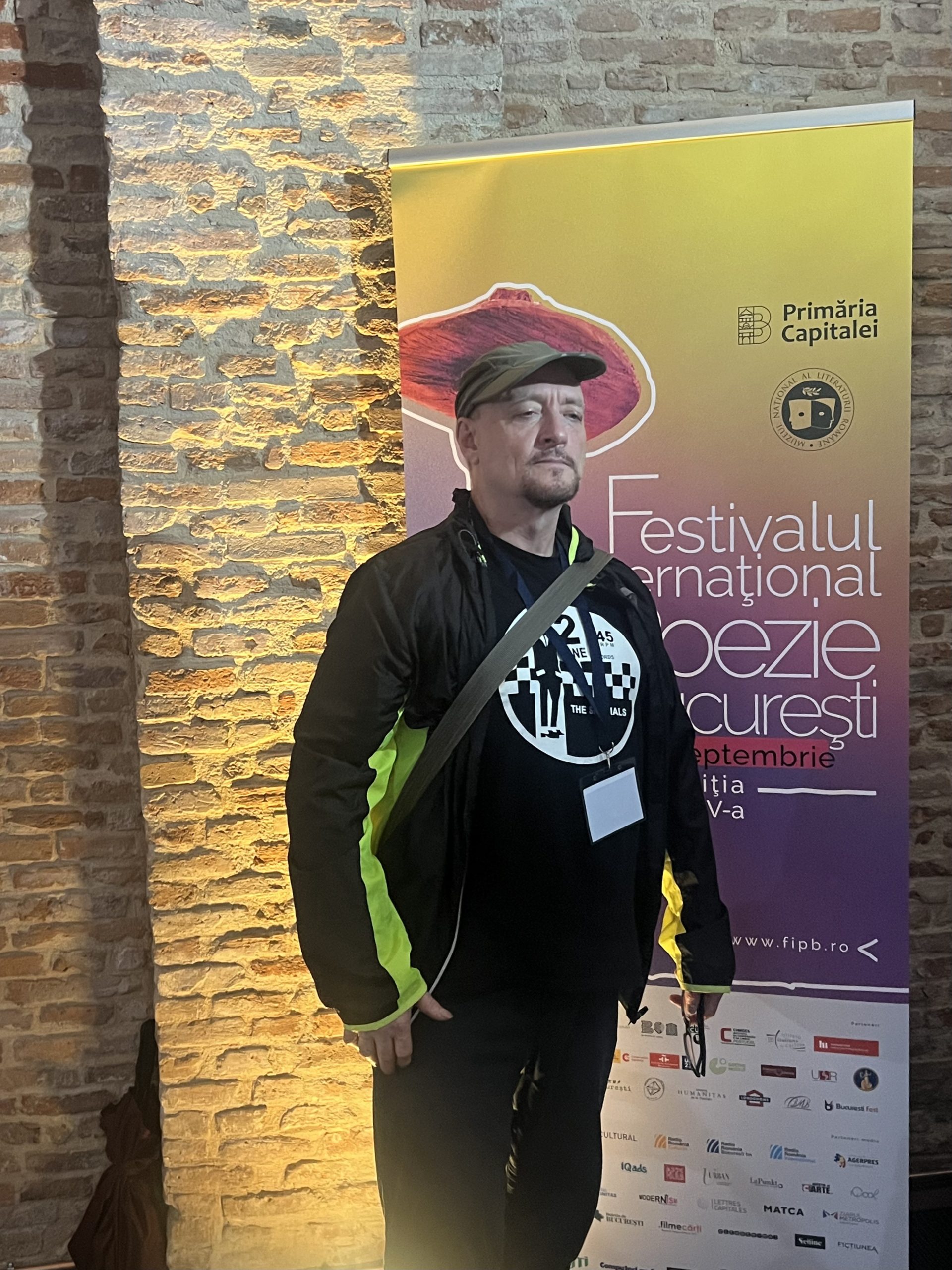
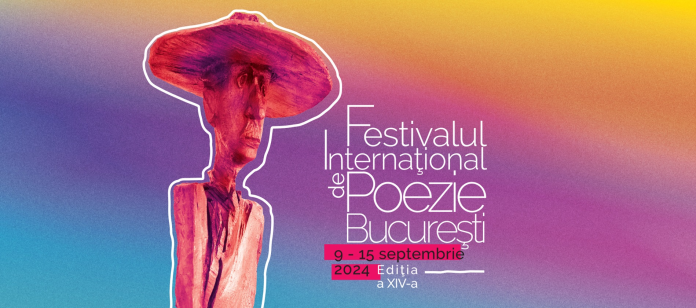
Afișul Festivalului Internațional de Poezie București – ediția a XIV-a, 9-15 septembrie 2024

See also the next article about the impact the workshop of Andy Willoughby had upon me, inspiring me to write a poem and two haikus at the following link: https://www.fitralit.ro/30-09-2024-andy-willoughby-his-meandering-workshop-in-performance-poetry/ (Peter Sragher)


Andy poeticizing ironically a world of words & feelings – foto Peter Sragher

7-11th September 20When invited to do Page to Stage workshops at the 14th Edition of The Bucharest International Poetry Festival Idecided I had two choices: one would be to invite poets to bring prewritten poems and work mostly on how to lift them from the page into performance with vocal and physical techniques which I have applied many times as a drama practitioner and poetry slam coach: the other choice was to impart these techniques as part of a uniquely created new collaborative piece.

I chose the second notion because I felt it would generate more energy and involve the possibility of creating and ensemble of the participants creating something unique for the locale. My aim was for all the participants to take part in writing exercises and drama games that would lead to a freeing of the mind for new individual work that could be intertwined in a group performance with possible links written by myself inspired by their work and some creation of refrains and echoing sound effects that could meld the performance together chorally. It is important to note that improvisation is a key element of my work as a poet and playwright so whatever I plan always has room to be opened up to the moment in the room and can be overruled by being sensitive to the outcome and the strength of response to any element. In this way I am drawing on bebop and jazz techniques as well as drama styles from my key influences like Keith Johnson, Bertolt Brecht, Augusta Boal and Rudolf Laban.

rivers, folk tales and group performance

I decided on the focus subject of rivers as I wanted an inspirational source anyone could respond to and also one that can be adapted to any city with a river running through it with the possibility of future international anthology and performance work linking the different cities I work in. The river holds the possibility of metaphorical writing based on autobiographical response, site specific response involving historical knowledge and spontaneous observation, and recycling of folk tales, international and local mythologies. I wanted to create a workshop over three days that can be repeated in different cities but would always have a unique response and also allow me to examine commonality of theme and emotion.

I also like to connect deeply with groups by involving them in my own process and this theme meant that the workshop would connect with my own work in progress Black River Sonnets which has the idea of the rivers of life and death and real rivers intermingling in a beat style improvisation. Thus the workshops were also be a valuable creative research tool for me.

„After overcoming a last-minute worry about recruitment for the workshop with the help of my local friends on social media I knew I had a mixed group in age an experience and made sure the prompts and improvisation exercises was suitable for a mixed demographic.

I delivered the workshop in Arctus in 3 days with three shifts in focus – the first day was all about engaging everyone and using improvisational techniques that would build up to rather than demand a poem, it is important to inspire rather than intimidate and

Short film during the workshop conceived by the poet & performer Andy Willoughby at Hanul Gabroveni during The XIVth Edition of The Bucharest International Poetry Festival, Bucharest – filmed by Peter Sragher

to create a word hoard in the bardic sense

also free elements of the unconscious through spontaneity and improvisation before moving on to set forms of any kind. The most important aspect of my method is to free the participants sense of self-consciousness through a sense of play and in a way to move away from the idea that the workshop has a specific poetry outcome at all at first. I based the first day on the idea of the river of life. The exercises I used involved creating a huge flow scroll to collect river images and vocabulary as part of a movement and spontaneous writing game, to create a word hoard in the bardic sense that could be used to weave new pieces from later. Then we created individual maps of the rivers of our lives first imagining and drawing them then writing allegorically on them like explorers. This allowed us to approach autobiographical material sensitively with no need for over disclosure at first/ too early which can lead to barriers in the self and group I have found in my work with hard-to-reach groups.  Then once the participants had loosened up with the drama games, drawing and indirect writing, and gelled through sharing we were able to move on to more mediation memory based exercises based on specific points on their life river map but using specific short forms such as gnomic triads and haiku drawn from spontaneous prose exercises – again to give them control over what they wanted to reveal or restrict. This was very productive pair sharing before group reading was very useful here and I was really excited about the quality of response, the haikus allowed me to show them how to concretize abstract response through an image which set up the second day of mythical and actual observation of the city river well and reading back without any coaching of

gnomic triads and haiku drawn from spontaneous prose exercises

performance at this point helped the group feel mutually supported and safe to share. The workshop also gave them all the materials they needed to create a longer response piece at home. One of the older participants told me she had broken a writers block by attending and one of the younger ones told me she had learned a lot about spontaneous and crafted response so I felt I had been successful in my aims and the fact that all were willing to share work was evidence I had created the kind of space where it was possible to feel creatively free. I also had a lot of images and allegories collected from the maps with the participants permission that I would be able to use in narrative link pieces in the final performance and the maps themselves would be a valuable tool to catch up anyone joining the workshop on the second day.

The second day involved reading the participants a new version of the local romantic folk tale of Dâmbovița and Bucur which contains a creation myth of the river as a symbol of pure love. This I was kindly written for me by my workshop assistant Iulia, a former creative writing student of mine in the UK, originally from Bucharest. Her local knowledge and storytelling skill was a valuable extra resource for me, as was the advice of my Romanian friend, fellow poet and collaborator Peter Sragher who encouraged my experimental tendencies in the workshop. I was then able to create a psychogeographical quest on a writing walk to and by the river, to find signs of the river of pure love whilst stopping and undertaking observational and personal memory tasks, this was a day of intense notebook writing with introduction of other observational short forms after spontaneous writing from observation and also involved a spontaneous performance at the end by the river which I knew would make the performance to an audience much less intimidating. I was also able to collect material of my own for more linking pieces on the final day.

Andy Willoughby preparing for the performance in a soldierlike, totally dedicated to poetry, performance and workshop mastery posture at Hanul Gabroveni, Bucharest – foto Peter Sragher

to find signs of the river of pure love

Overall, it was very satisfying to take the walk with the group and write concrete observations, mythical reinterpretations and emotional responses which connected us all to the real river and the city it’s complex and fascinating history. One of the youngest participants told me she had learned a lot about observing more closely and connecting that to her own consciousness which was great evidence for me of the value of this kind of writing walk and the sense of a collaborative group was reinforced by the improvised but guided public performance for the camera at the end.

Now we had enough material from the two days to create an interconnected performance piece on the third day, I asked the group to all bring in two poems developed from the two days and we were able to work out an order that loosely connected them through theme, image or emotion.

We worked on solo and choral reading incorporating some group slam methods like echoing, physical movement and repetitions. I was able to compose three pieces to help introduce the piece, reflect upon it and conclude which would help the group in separating their pieces in

work on solo and choral reading

collaboratively performed sections. The end result was a fascinating set of perceptions, memories and reflections upon the theme of rivers, love, time and the city. One participant included one poem only in Romanian and I was very pleased by the heteroglossic effect of this and would like to experiment more with this in the future. I was a little short of time to play performance games to improve volume and clarity, but I was able to arrange a rehearsal before the final performance to incorporate these.  

The performance was really well done for such a short process and has the potential to become a bigger performance poetry and physical theatre/ multimedia piece. The audience reacted very well to the event on the Saturday night and as it was about forty minutes long with an extra introductory ten-minute performance by Peter Sragher inspired by the workshop we had room to include an open mic and the participants felt confident enough to get up and perform their other poems.

In conclusion the three days went very well, the participants clearly found the process and performance both inspirational  and confidence boosting, I was extremely pleased by the way the group, the assistants from Bucharest and even the filmmaker documenting the process all combined to work with me as an ensemble, and at the same time developed individual pieces I was able to help edit and advise on. I also gathered invaluable material for my own work.

My constructive criticism would be that a group could be gathered earlier and maybe a preliminary workshop / slam in a school/ college / university a month or so before would help recruit for this kind of workshop during a festival in the future. Also pre-programming an open mic after such a performance (maybe including the theme like rivers) would help draw an even larger audience – this could include original songwriters as well as poets to create a real cabaret style effect for the evening.

 28/09/2024